

Psychosocial Safety
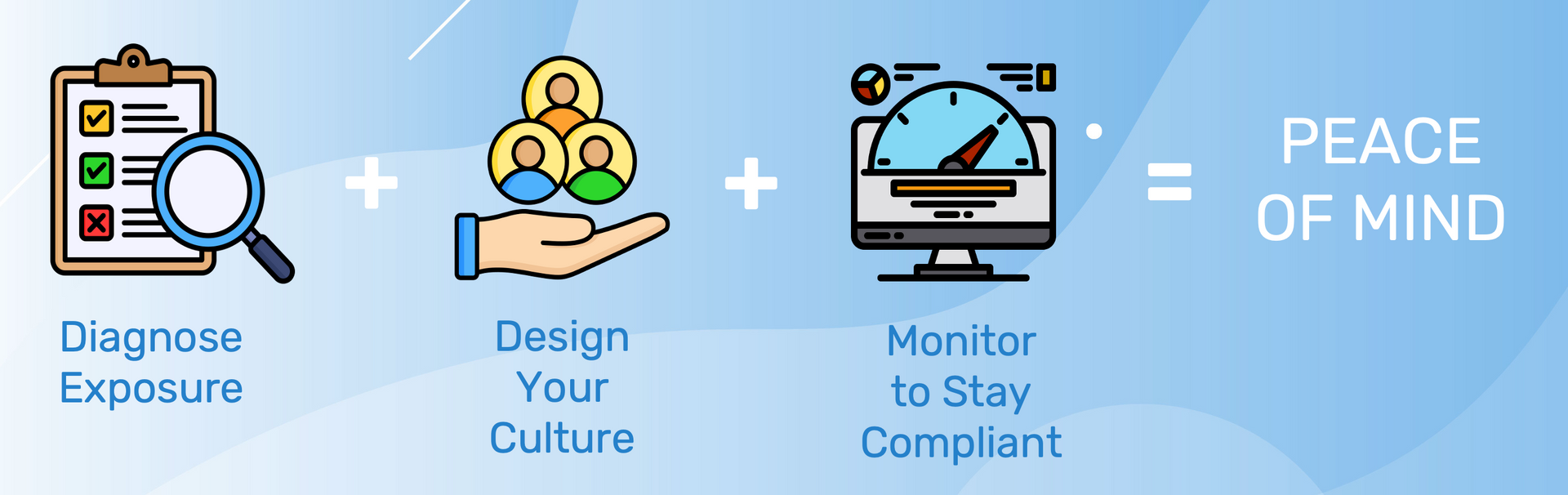
If you’re looking for a Psychosocial Safety survey tool, you’ve come to the right place. Our software platform, Salpulse, is that. But that’s not the whole picture. Our 3 step process gives you peace of mind.
If you want a
complete, defensible approach
to managing
psychosocial safety, that’s built into your culture, read on…
As of 1 December 2025, psychosocial safety carries the same legal weight as physical safety under new WorkSafe regulations. Organisations are now required to identify, eliminate or reduce psychosocial hazards - not just write policies. Psychosocial hazards include the obvious (bullying, sexual harassment) and the less‑obvious (high job demands, low role clarity, poor change management).
Most organisations know they need to act.
Very few know what to do.
We've just turned 10!
Let's celebrate together
To celebrate Salple's 10th birthday, we're offering $500 off your first Culture Explorer Survey - for a limited time.
Contact Us
Thank you for contacting us.
We will get back to you as soon as possible
Please try again later
** We will contact you with a quote that includes this discount
Psychosocial Safety is Not a Paperwork Exercise - it's Part of a Culture System
Psychosocial safety is shaped by:
- How work actually gets done
- How decisions are made under pressure
- What behaviours are rewarded or tolerated
- How clear expectations are
- How engaged (or disengaged) your employees are
At Salple, our foundational belief is that Employee Engagement is the engine of psychosocial safety. From our work with many organisations, we’ve found that engaged employees are significantly less likely to experience psychological harm. Disengagement, misalignment, and poor fit aren’t just performance issues - they are psychosocial risk factors.
We define engagement across six elements:
- Job Eligibility - the qualifications and experience needed to perform the role
- Job Suitability - alignment between behavioural preferences and the behaviours required for the role
- Culture Fit - alignment with the organisation’s values and ways of working
- Psychosocial Safety - feeling safe to participate, contribute and take interpersonal risks
- Purpose Alignment - knowing how one’s role advances the organisation’s purpose
- Personal Engagement Factors - fulfilment in personal engagement factors that matter to each individual (e.g., development opportunities)
When these six elements are strong for an employee, they thrive and are more resilient. When they’re weak, psychosocial risk increases - sometimes dramatically. This is why psychosocial safety cannot be solved by policies alone. It must be designed into the culture, the work environment, and the employee experience.
This is why many organisations still feel exposed - they focus on compliance, through excessive policies and rules, instead of culture system design.
The 3‑Step Psychosocial Safety Solution
Our process defines a practical, end‑to‑end solution that gives CEOs and HR Managers clarity, confidence and defensibility.
Step 1: Diagnose your current exposure
Understand where your real risks sit - before they escalate
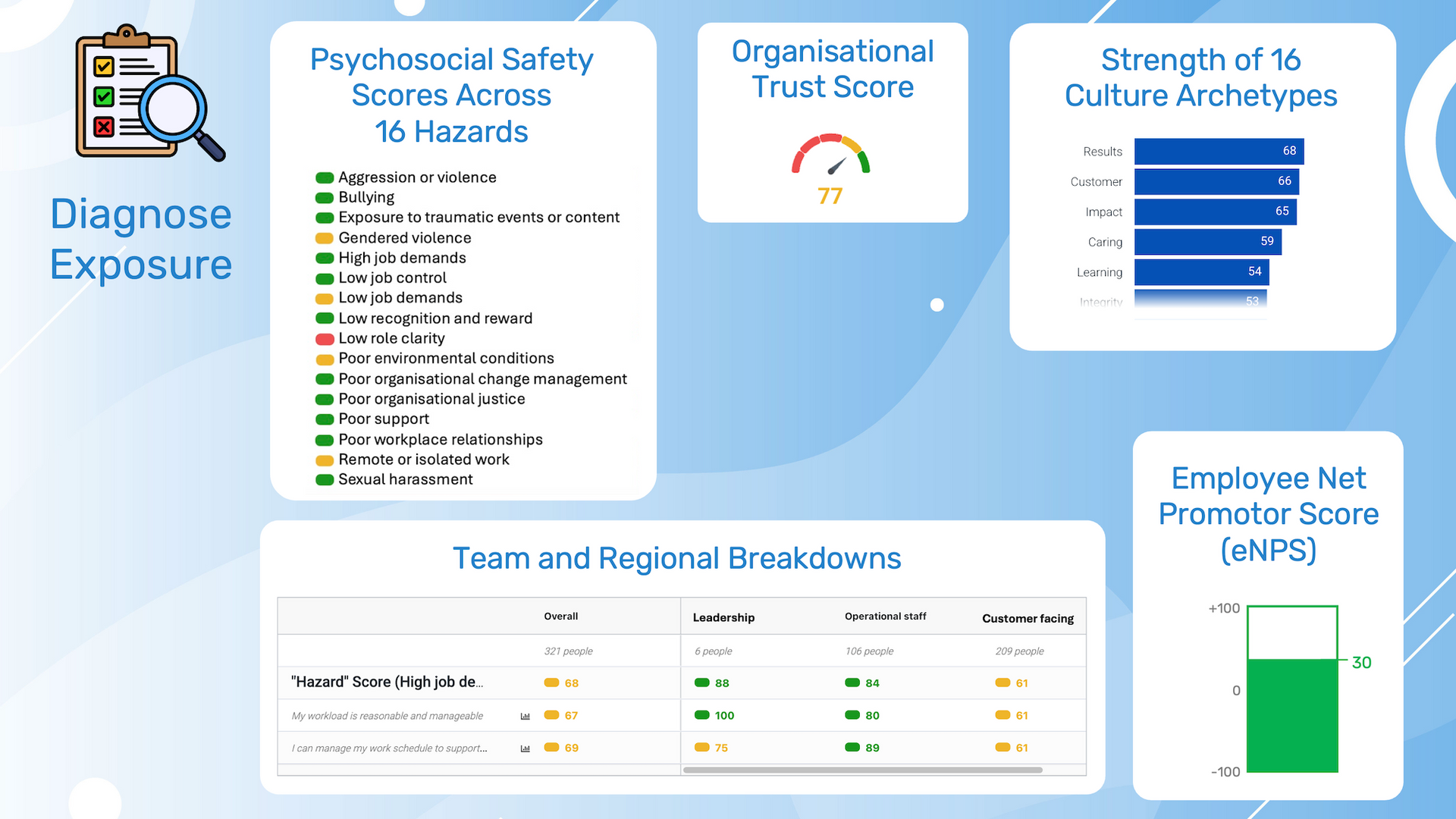
Using the Salpulse Culture Explorer Survey, we map how your culture is experienced across your organisation, including measuring:
- Psychosocial safety across the 16 hazards identified in the Act
- Organisational trust
- Employee engagement and employee net promotor score (eNPS)
- Early warning signs by department, team or location
- The relative strengths of 16 culture archetypes
This gives leaders:
- A clear, defensible baseline
- Identification of real hotspots
- Clarity through data - not guesswork
Using
Harrison Behavioural Analytics, we then map how your culture is being
shaped by the behavioural preferences of your people. Together, Salpulse and Harrison provide a deep understanding of your current culture, highlighting the forces shaping it and the effect those forces are having on your people.
Step 2: Design the culture you need
Address risk at the source - not just the symptoms
Psychosocial safety improves when expectations are clear, behaviours are aligned, and employees understand how their role contributes to delivering the organisation’s strategy.
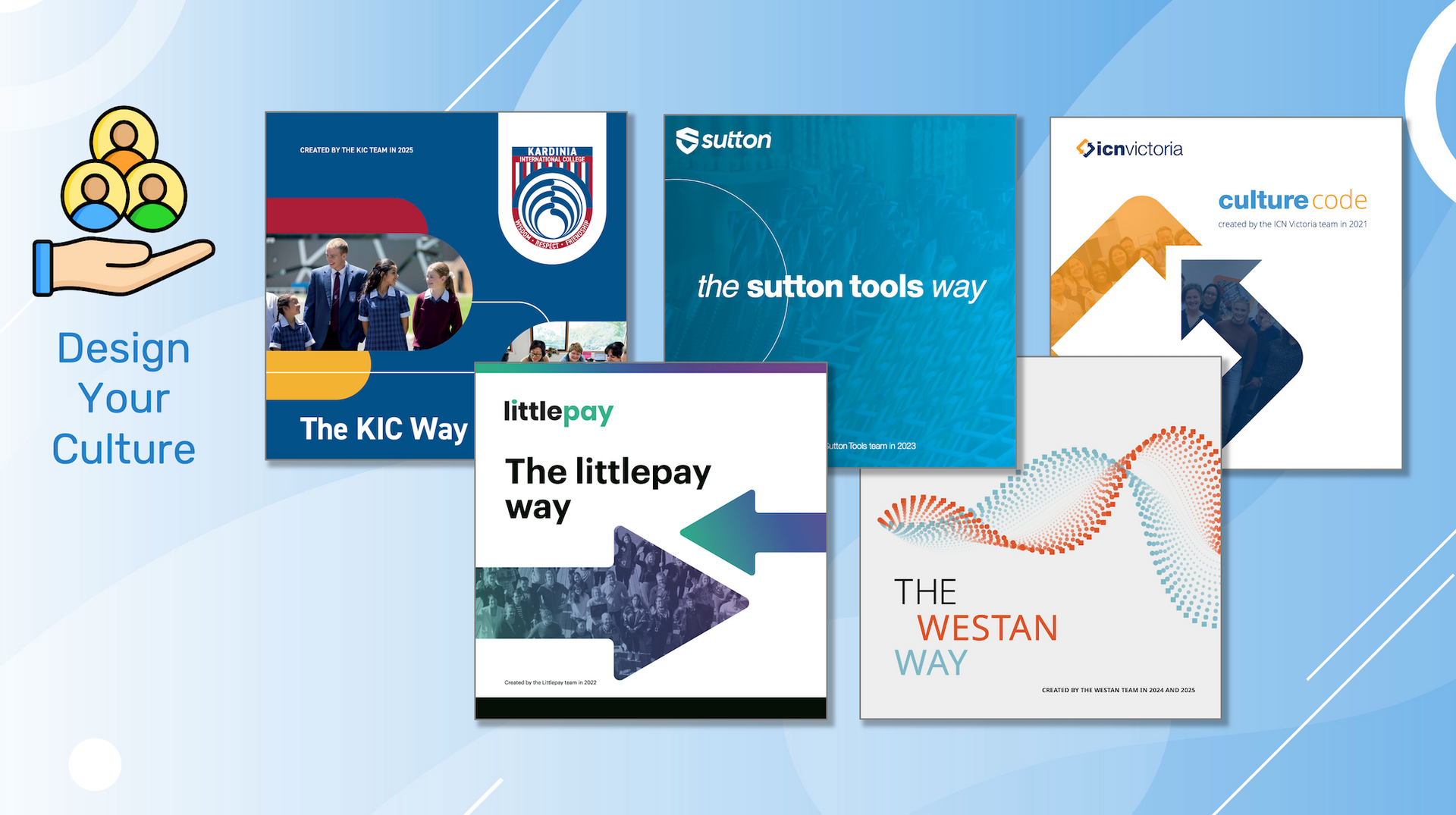
Over 10 years, we’ve developed and refined a process to help you co‑create with your employees, a Culture Code. A Culture Code is an articulation of what matters most. It’s a reflection of your organisation when it’s operating at its best. And is made up of your:
- WHY - your organisation’s purpose
- WAY - core values, behaviours, and psychologically safe ways of working
- DO - strategic priorities and expectations
Your Culture Code becomes your
Behavioural Operating System - embedding psychosocial safety into day‑to‑day work. It’s about how people actually behave when no one is looking.
Step 3: Monitor to sustain compliance
Move from reactive to proactive - and stay there
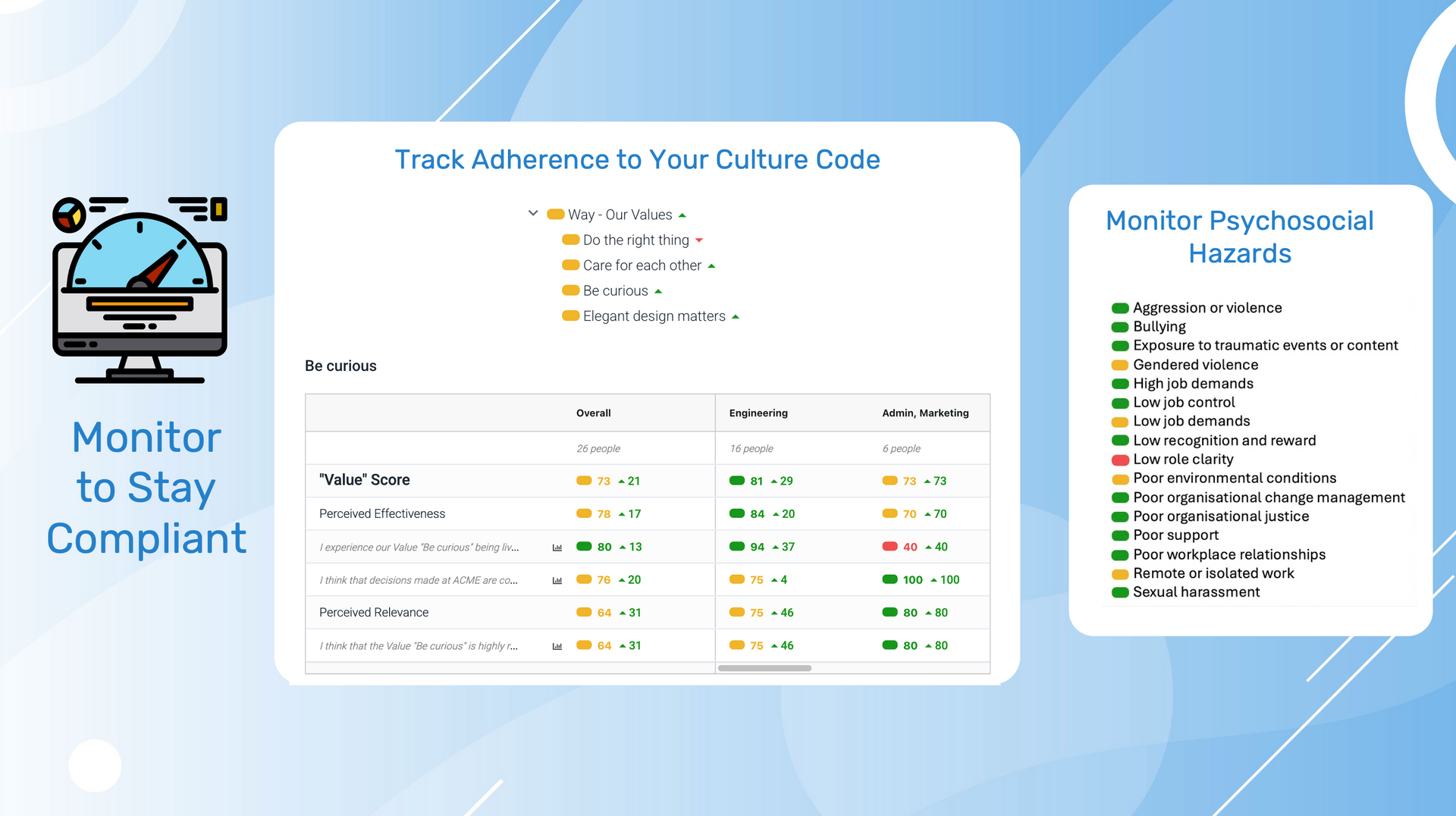
WorkSafe requires ongoing risk management, not just a once‑off survey. Using Salpulse, we help you:
- Regularly monitor psychosocial safety, trust and engagement
- Monitor how well you are tracking against your desired culture
- Identify emerging risks early
- Track improvement or slippage over time
- Maintain a defensible record of action
- Demonstrate active compliance with WorkSafe expectations
This gives CEOs confidence that issues are surfaced early - not discovered during a WorkSafe investigation.
Why CEOs Are Working With Salple?
CEOs and HR Managers trust Salple in the sensitive area of Psychosocial Safety because our process is:
- A complete system - diagnosis, design, monitoring
- Culture and compliance solved together
- Data‑informed but also deeply human
- Aligned with WorkSafe’s regulations
We don’t just help you comply. We help you build a workplace where people can do their best work – safely, and aligned to your organisation’s strategic goals.
Who Have We Worked With?
We are an Australian family business, and have developed Salpulse for the local market. We have helped lots of Australian organisations and businesses like yours with culture and psychosocial safety over our 10 year journey. See
Salple's Client List.
Icons by flaticon.com